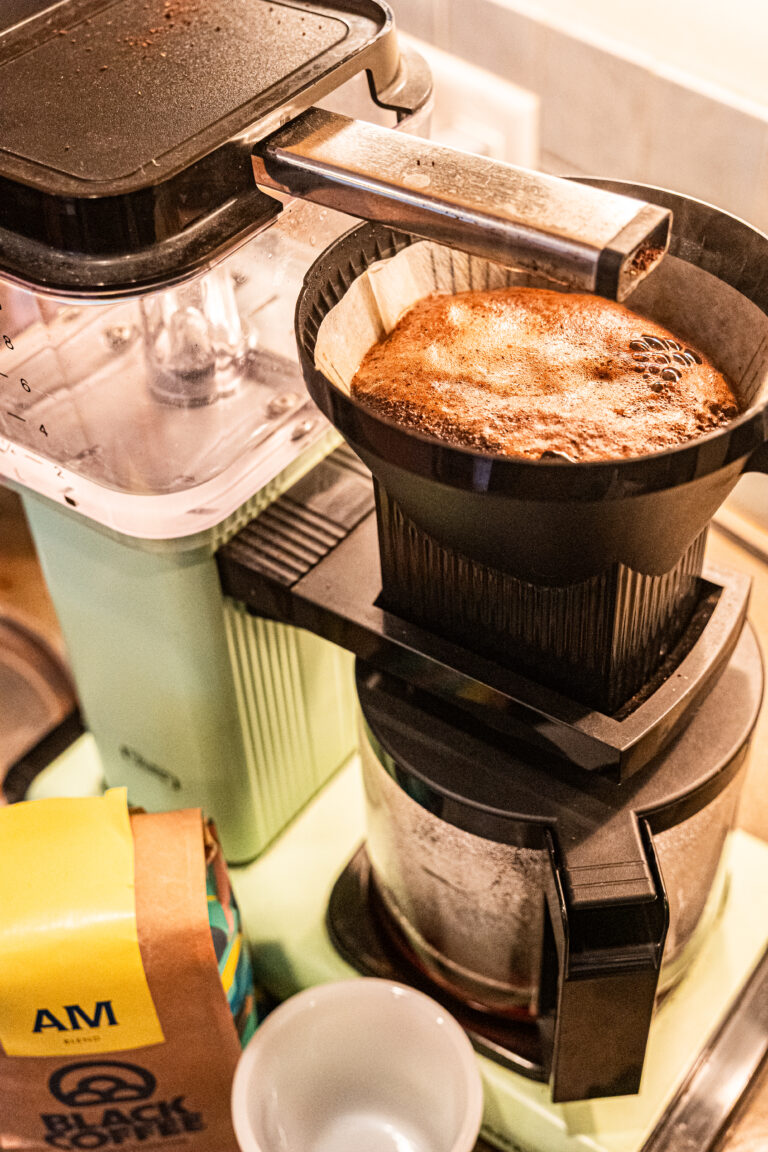
 It’s officially summer. Schools are out and the pace of town is evolving into summer mode. At the shop it’s warm enough to open the garage door. The weather is warm. It’s camping season. There is no better coffee than coffee in the woods. And there is nothing better, than coffee in the woods. Coffee on the front porch is a close second, but when I get a chance to be out in the forest or out in the open hills or by a creek or even at the ocean, I’ll take it. So I thought I’d break down my five favorite coffee methods for camping, the French Press, Instant, Moka Pot, Aeropress, and percolator. I like all five of these methods, differently. I have room for all of them in my life. Let’s dive in… (You can click on the heading for each item to shop) FRENCH PRESS The French press is not only great for home coffee, but fantastic in the woods. But I’d add a caveat – I don’t like glass French presses. Or maybe it’s that they do not like me. It’s not that I don’t like the coffee they produce. Any French press can produce a good coffee… it’s that I break them. Especially camping. A French press is simple in its brewing, and it’s that simplicity that I love. It’s also that simplicity that allows them to make such good coffee. A French press does not require an exact grind. It needs to be generally course, but unlike some brew methods, uniformity is not at all important for a French press. You are soaking the ground coffee for several minutes in hot water, then pressing the grinds to the bottom of the vessel. The only real problem you might sometimes encounter when brewing a French press is if the grinds are too fine it can sometimes be difficult to press the coffee. But short of that, the grind size does not really matter. Put grinds into vessel. Add hot water. Wait 4-5 minutes. Press. Enjoy. It’s so wildly simple and in my experience, I think it is one of the best ways to taste the true nature of a coffee. I think it’s as good if not better than a pour-over (which is said by many industry insiders to be the best method) in this regard. I’m not afraid to go against the grain on this one. I stand by the French press. But lastly on the French press, I’m particular. I’ve been using the Frieling so I swear by it. I’ve broken countless glass French presses over the years, some of my own, and some of my friends, but I’ve never broken the Frieling. In fact, I’ve owned one of them for nearly 2 decades. It’s twin walled, so keeps the coffee hot while it brews, it has a double mesh screen, so it filters the coffee fantastically, and has zero plastic or breakable parts… I’ve never had to replace a single thing on it. I’ve traveled with it in my backpack from Asia, to Africa, South and Central America, and all of the US, and fully expect it to outlive me. It’s a “buy it once for life” product, and I highly recommend it. INSTANT COFFEE Instant is just so dang easy. We sell it in single serving stick packs and a bulk tin with 25 servings. The sticks come in at just over $1/ cup while the bulk comes in under $1/cup. And while it is not a replacement of coffee beans for me, it is a fantastic substitute and backup for the right moment. Many people have told me it’s all the drink now. Why? Because it’s incredibly easy and delicious. Organic coffee powder you put in your cup, and add water. (It’s also great with a splash of cream!) That’s it. That’s the whole game. Hot or cold, it makes a solid, reliable coffee anywhere, anytime. I keep a few sticks in by packs, and scattered throughout my truck as well as in our camping gear and even on the rare, but not unheard of occasion that I forget beans, I always have a backup supply on hand. We came up with our instant after some longer trips we’ve taken over the years in which we started out with a solid supply of beans but ran through them faster than anticipated and in remote areas of the world had a hard time finding beans at all, let alone good ones. On one of the trips in rural Peru we found ourselves drinking Nescafe instant, and had to ask ourselves, why don’t we just make an instant? So we did. And now whenever I travel I take not only a Frieling French press + beans, but instant backups. For backpack trips, hikes, and plane travel I generally only take instant at this point. It’s just so ridiculously easy. And delicious. Hot or cold! MOKA POT The mythical moka pot is another that lives in my camp kit, along side my French Press. Yes, I have all the systems… It’s my job after all. And while my primary default camping is the French press, the moka pot gets a lot of use as well. It requires a little more consistent of a fine grind to turn out well, but I can generally get a good enough grind with my hand grinder to get a good one. Often I’ll pre-grind an espresso grind at work to take along for this. If you order our coffee online, we do pre-grind, and if you use a moka pot, it’s not a bad way to go. While the moka pot will make a good coffee with a courser grind, it really shines with a finer grind which allows more pressure to build up in the tank before the water is pushed through the grinds, resulting in a richer, more robust coffee. Depending on my mood, or how many others are drinking with me, I’ll sometimes dilute with hot water a little. But straight from the vessel makes a thick, viscous and wildly satisfying cup of strong coffee. Often if we are packing up camp and moving along, and I only have time for one coffee, I’ll make it a stronger one by using the moka pot. The other advantage is speed. While not as fast as an instant, it is faster than a French press, percolator or even Aeropress. AEROPRESS The Aeropress is so easy to have along. It’s often overlooked in my kit, but not because it doesn’t make a fantastic coffee. In fact, whenever I make an Aeropress I wonder why I don’t drink them more often. They make such a beautiful, clean and fantastically delicious coffee. My only gripe with them is that they are made of plastic, and I don’t love brewing coffee with hot water in plastic. But whenever I use one I marvel at how good of a coffee it makes. Generally speaking, the Aeropress wants a relatively fine grind. Not quite as fine as an espresso or moka pot, but close. Finer than drip and French press for sure. My hand grinders can attain this grind, but again, sometimes it’s nice to have pre-ground for the Aeropress. Brewing is relatively simple. Set the brewer on the cup. Add the coffee. Add the water. Put the plunger in place so it vacuum holds the water, and wait about a minute and half before pressing. Then add water if you want a little more dilution. It’s an easy tailgate coffee. It’s also a nice one you can fill easily at gas stations on the road. (Instant is supreme in this regard, followed by the French press which is also easy at a gas station.) One recommendation for the Aeropress – Check out the Fellow Products Prismo, which is a filter upgrade for the Aeropress. It’s a metal, mesh filter that also holds the water in while it is steeping, and creates added pressure for plunging, resulting in not only an easier brew, but a better one. The paper filters work very fine, but I prefer the coffee made with the Prismo filter and love that I don’t have to have a stack of paper filters along with me in order to brew a cup. The Prismo also allows you to not worry about whether or not the plunger is in place while brewing because it has a pressure valve which prevents coffee from pouring through at all until you press with the plunger. It just makes it easy, and in my mind, better.  PERCOLATOR Last on the list, the mighty, and old school camp percolator. I’ve been known to frequently make these at home on the stove as well. A few years ago when my home espresso machine went down, I got on a percolator kick for several months. And with good reason. The percolator makes awesome coffee, and lots of it. It’s why I love it for camping with friends. It takes a little longer, but when it’s done you have coffee for several people, depending on the size of the percolator, of course. This method is also not picky about grind size. Course works great. It’s so incredibly basic and easy. Add water to the pot. Insert the filter, which hangs above the water in a nested basket which remains suspended above the water, and add your coffee. Put it on the stove. Bring the water to a rapid boil and then turn it down a little so it continues to percolate for the net ten minutes or so. It’s usually around 10 minutes before the coffee is satisfactorily strong, but taste along the way to see what you like. There is something refreshingly old school about using a percolator, watching the coffee brew through the glass percolator cap on top, slowly darkening as it becomes stronger and stronger. You can make it on a stove or a campfire, all the same. And when it’s done you have enough for several cups. It’s a great way to make coffee with friends, or just to have a pot simmering on a fire for a lounged morning in the woods. While we do not sell percolators, there are a lot of great ones out there. I recommend looking for a stainless steel one with a true glass top. SO WHAT COFFEES DO I RECOMMEND? I use all these methods regularly, and love them all, even if differently. My go to is the French press, but I keep them all in my camp kit and love to mix it up between trips. Sometimes making coffee is more speed oriented, at a rest stop or gas station, or a morning in which we are packing up to move, while other’s happen more when we are taking our time and lounging longer. And while all our coffees work in all these methods, over the years I have come up with a few that I think shine with various methods. For a French press I love Laura. I just think it fits right with that brew method. There is something very dark woods about it, but with a touch of elegance that the term French hits upon. Laura has that in the blend from the touch of natural process coffee it has in it. For the moka pot I love 6 Towers, Vinyl and our single origin Mexico. Both of these coffee can handle the high intensity pressure that brews the moka pot. They do not taste burnt, but are richly rewarding and satisfying in the moka pot. For the Aeropress I love AM. Don’t be fooled by AM being categorized as a light roast. The roast of its components does lean a little lighter, but it’s a rich, satisfying cup that has plenty of body to standup. Don’t think weak, acidic Portland style coffee. This isn’t that. It’s intended to start the day… thus AM. And it won’t leave you disappointed or craving. I also love Red Room andJimma in the Aeropress. The percolator is an open game. I love our full spectrum of coffees in the percolator from AM to 2 Tone and The Dark. It is perhaps a less elegant brewing device than other, but once you play with it, and figure out how long you like to brew the coffee in it, it’s easy to make a great, rich cup of coffee with it. If you brew it over a fire you get bonus notes of woodsmoke, which I think is a reward. PNG, Nicaragua, and Vinyl are all solid choices to start out with the percolator. Hope this helps you with your summer coffee. If you have questions on brewing devices, specific brands, or which coffees to use, shoot me an email at [email protected] – I love to talk coffee, and will happily help anytime. Cheers to summer, and cheers to drinking great coffee in the great outdoors! (We post a lot of coffee & the great outdoors on Instagram. Join us @blackcoffee.mt)  |
Similar Posts
Coffee pricing & what you need to know
Coffee is in the news for a lot of reasons lately, some good with regards to ever new health discovery benefits, and others less good, especially with regards to price. Coffee prices are rising. Why and what does it mean…