
MOLD IN COFFEE… What you need to know.
Let’s talk about coffee & mold.
MOLD is a four letter word we never want to associate with things we ingest (except good cheese?), let alone the thing that brings us the most pleasure in our morning… coffee.
But apparently there are a lot of Tiktok videos going around raising the alarm that mold in coffee is the new danger we all need to fear, run away from, and change our purchasing habits around. But is it true?
Firstly, I am not a mold expert. I am not a moldologist. If you have legitimate health problems associated with mold, please talk to your doctors. But I do know coffee. I have been in coffee for a long time, and talked to a lot of people imbedded deep in the industry, from families with multiple generations in coffee to experts on coffee quality, importers, exporters, farmers, producers, roasters, and so on. I also read a lot more than the average coffee afficianado on coffee.
So when mold questions starting appearing in my email box last year I started to get more curious about this specific subject and started asking more questions and reading more about it. I thought I’d address it as this last week I’ve gotten two more emails asking about the presence of mold in our coffees.
Is there potential for mold in coffee? Yes. But even if it is present, it is most likely in very low concentrations, not enough to affect you. And if you have high quality coffee, it is probably not present at all.
Does it make you sick? Probably not.
Is it present in every coffee? No. It has only been found in about 40-50% of coffees, and almost always low grade coffee.
Can it be avoided? Sure.
Do you need to be concerned? Not really.
More than anything MOLD has become a fear tactic in selling coffee. Fear gets attention. Fear makes headlines. And a handful of companies have cleverly figured out that there is a demographic of concerned coffee drinkers that they can alarm with the world “mold” and then sweep in to offer them their products. Meanwhile those same people are consuming grains, nuts, flours, and juices that contain far more mold than coffee without knowing it. Mold in coffee is not abnormal in low grade coffee, but even then it is at such a low concentration that it rarely becomes a problem for the human body.
Here are a few things to keep in mind with regards to mold in coffee. Mold is present in most foods in very low quantities, including most grains, oats, flours, nuts, and juices. It is less prevalent in coffee as it is inhibited by caffeine. The amount of mold common in foods is very low, and not enough to produce dangerous levels of the mycotoxins that are of concern. It is even less dangerous in coffee because it is less present.
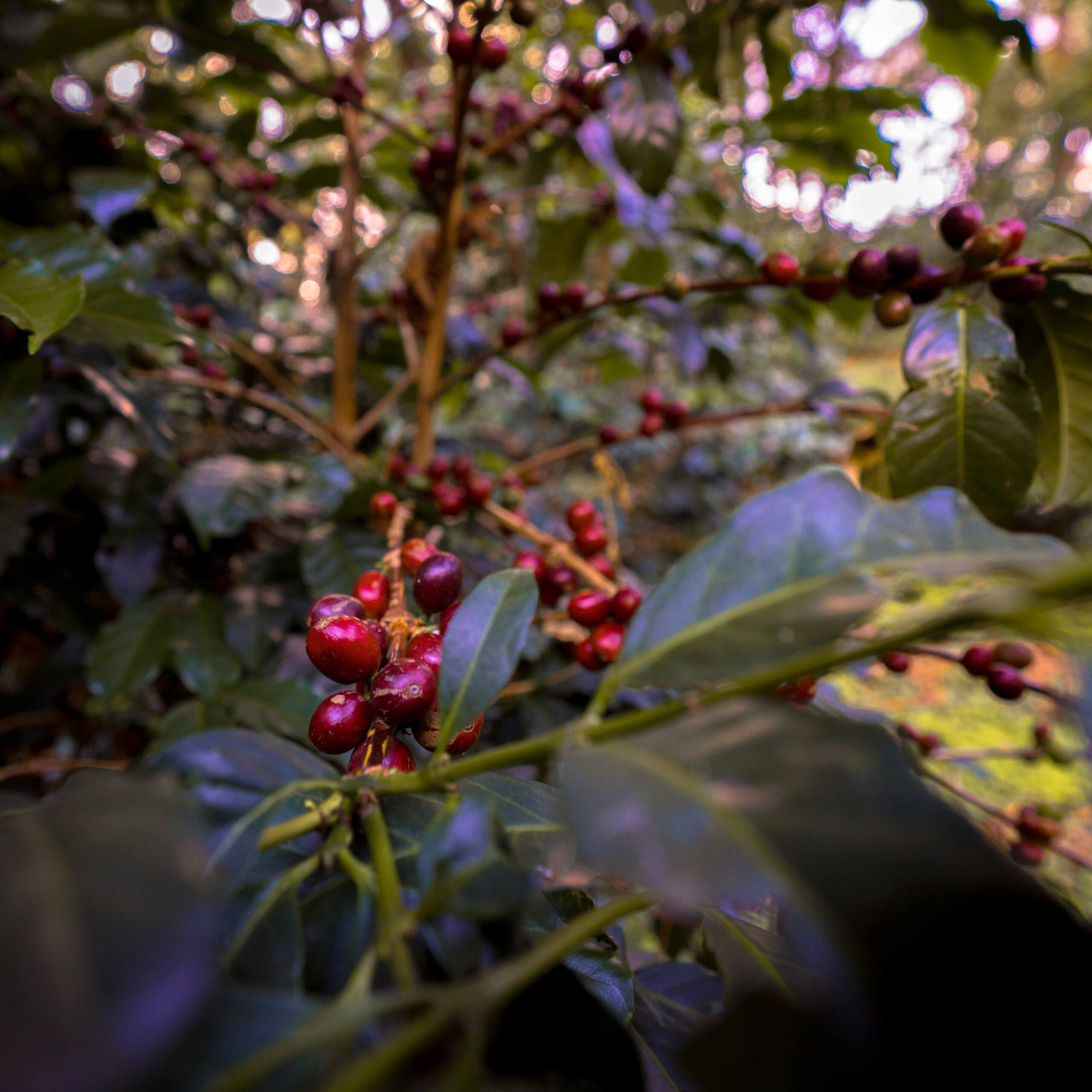
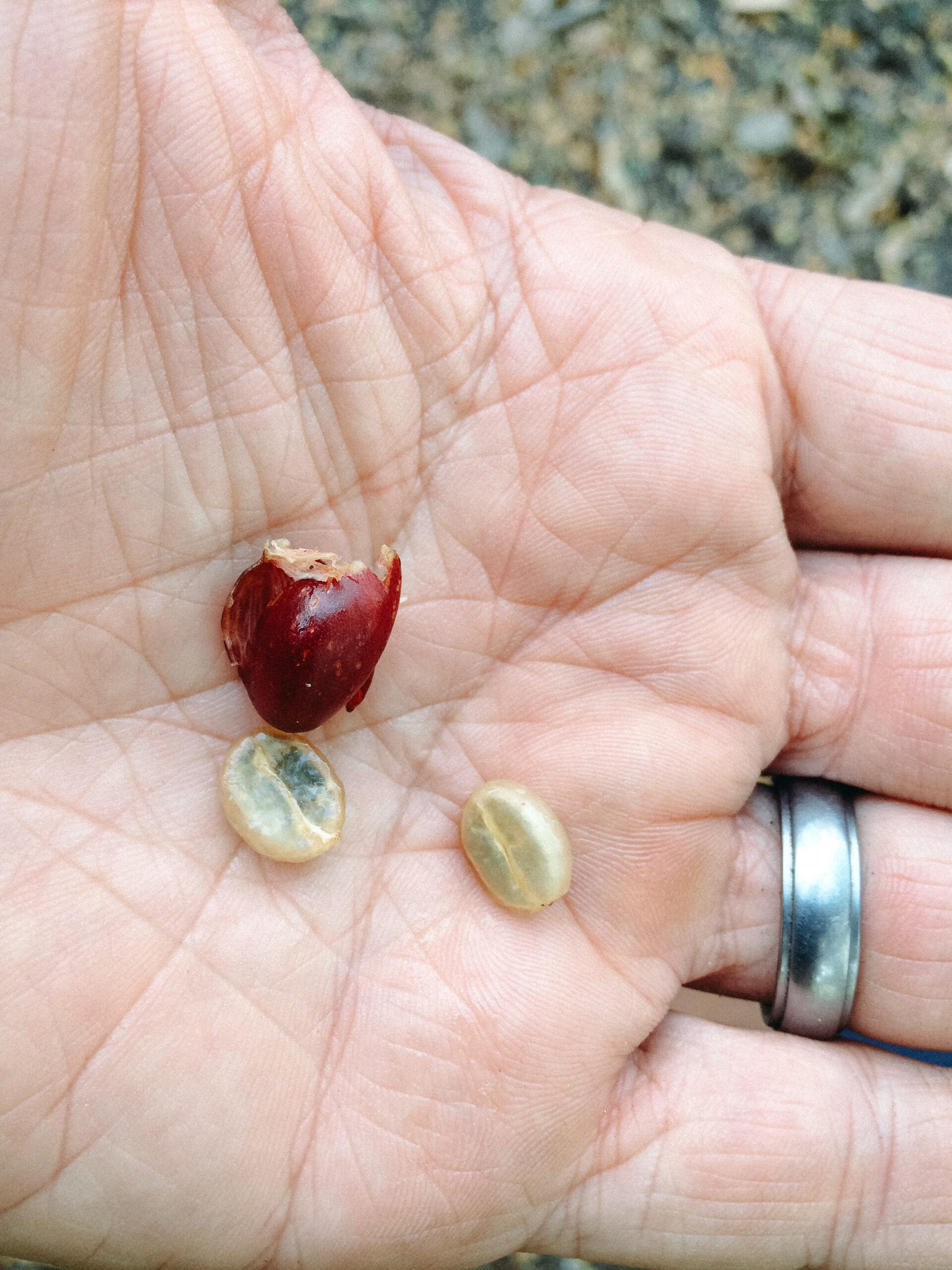
Mold growing on coffee is really only a concern with low grade coffees that have been poorly stored before and after processing. Coffee starts its life as a coffee cherry on a coffee tree. The fruit is harvested with the goal of extracting the seed from the fruit. That is the “bean.” And while this is an elementary explanation of what happens next, there is a lot more too it and a lot more variation between producers, the fruit is generally dealt with in two ways after harvest. The fruit is either removed immediately to allow the seeds to dry over the course of several days, or the fruit is allowed to remain intact and the allowed to dry on raised screen beds (think raisin.)
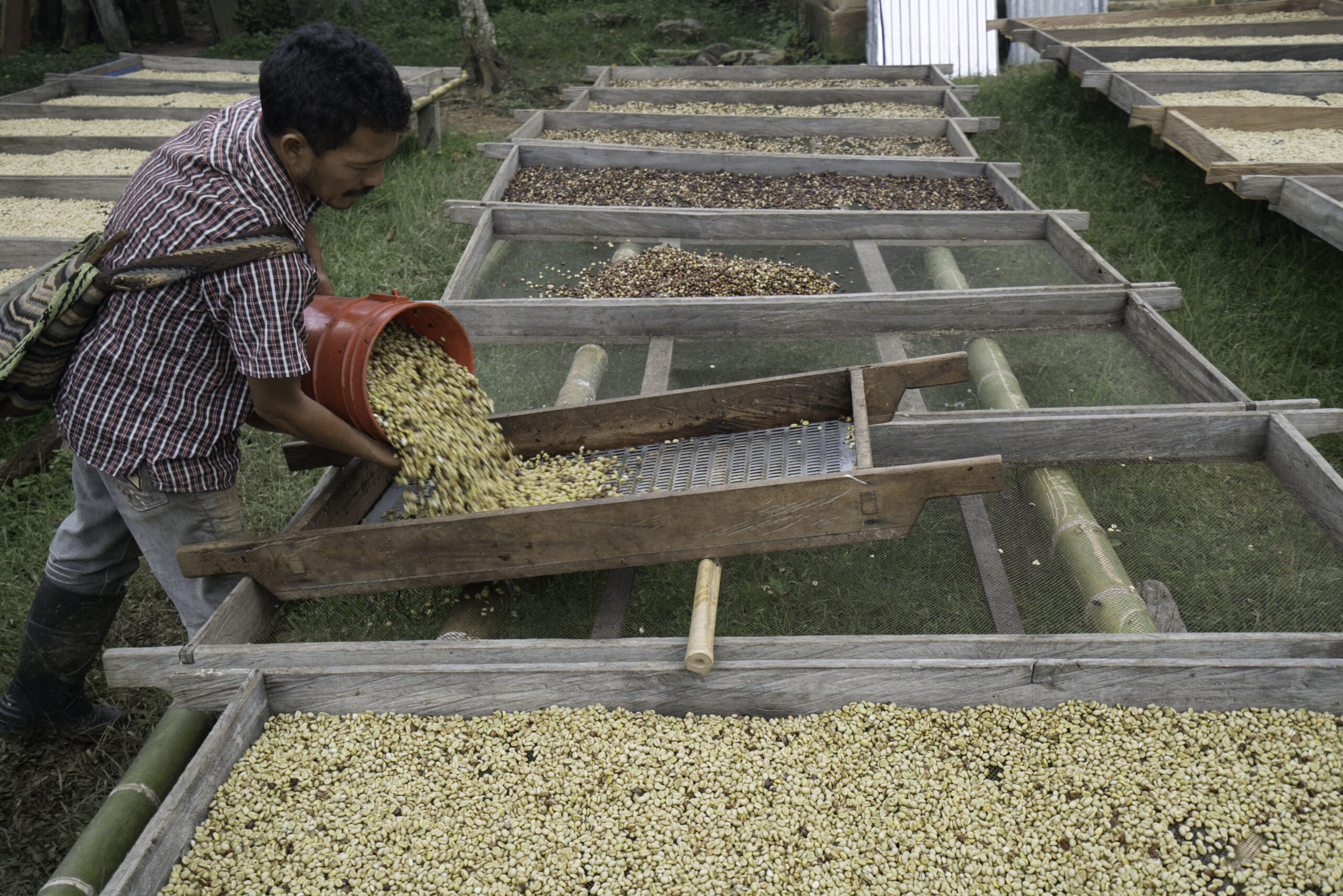
During the drying phase of both, the coffee is moved around allowing uniformity in the drying process, and, importantly, to avoid mold growth. Quality coffees have a very specific moisture level they are seeking to attain. And once stabilized at that level the coffee is not at risk of mold growth.
During this process, with or without the fruit in tact, the coffee is turned, often several times a day. In wet climates the coffee often has to be covered and uncovered throughout the day to avoid exposure to more moisture. During this process the seeds inside go through fermentation which creates the base of the flavors of the coffees we know. Quality coffees are dried thoroughly, uniformly, and quickly enough to avoid mold issues.
Add to this, during the scoring process of coffee, which determines if it will be sold as a commodity coffee (cheaper) or to specialty coffee companies (more expensive and far less common), mold is specifically looked at as part of the scoring process. The presence of mold is one of the contributing factors to a coffee being scored lower, and thus putting it into the commodity rather than specialty market. We do not purchase any coffee that scores that low.
If any molds are present, the roasting process kills upwards of 90% of any molds present. Should any remain, it has little chance to affect drinkers.
Mold could potentially be a problem with low grade coffee, but even in this case it is uncommon and unlikely. Low quality decaf that has been mishandled is the most likely candidate for mold.
So should you be concerned? Probably not. It is statistically improbable that you will be affected by mold in your coffee. You are far more likely to encounter molds that produce mycotoxins in your grains, flours, nuts, fruit juices, and other foods. Trace amounts are almost impossible to avoid in the modern food supply. But the human body has far more resilience with regards to these low exposure levels as to not be a concern.
Do we test for mold? We are required to test our instant coffee and we have test results confirming the absence of mold. But we do not test our whole bean coffee as we purchase high quality, organic coffee that has a specific moisture content and is fresh crop. All the coffees we bring in have been produced to a high standard and are less than a year old. We have no concern about mold in our coffee.
If you want to rest assured you are not being exposed to dangerous molds in your coffee do these simple things: First you can buy INSTANT that has been tested. But beyond that you can focus on buying quality coffee. Quality coffee is from a reputable roaster, it probably is not the cheapest on the shelf, is ideally not been sitting on the shelf for more than a few months at most, and ideally is organic. Organic not only ensures it has not been exposed to poisons, but also includes a number of regulatory handling practices that further ensure its quality handling. In once recent international meta study, organic practices beyond just coffee have been shown to have lower mold presence in crops as well as having a more favorable content of antioxidants and micronutrients. Lastly, store you coffee at room temperature in a dry, cool space. A freezer works too. We made a video discussing storage methods you can watch on YouTube HERE:
If you ever see mold on your coffee, which in all my years in coffee I’ve never seen, it would probably be wise, like you would with anything in your cupboard or refrigerator, to get rid of it. It is very likely had a major storage problem. Again, I’ve never actually seen mold on coffee, green, roasted, or otherwise. The concern over mold in coffee is largely hype, created to instill fear and change your buying habits. It is not a real world concern for 99% of us.
Meanwhile, reading about mold in coffee I came across dozens of references to the health benefits of coffee. Of course, you say, I sell coffee. But more importantly, I love coffee. I feel good when I drink it. I like the way it affects me, so reading about health benefits is a bonus.
Here are a few things I came across:
Regularly drinking coffee lowers all-cause mortality, and significantly reduces risk from heart disease.
Coffee is shown to improve gut health by increasing beneficial bacteria in the gut.
Regular coffee consumption is associated with lowering many cancer risks.
An increase in coffee consumption decreases risk of type-2 diabetes.
Coffee has an anti-inflammatory effect on the body.
Coffee lowers the risk of Parkinsons and Alzehiemers diseases.
In general the sweet spot for coffee consumption is 2-3 cups per day, though we all react differently to caffeine levels. Interestingly, many of the health benefits of coffee still result with decaffeinated coffee.
The gist of all of this is that in the world of modern marketing there is a lot of fear mongering entering the conversation in coffee. And avoiding mold in your coffee is not nearly as complicated as those sellers creating this fear would like you to believe. So make and enjoy another cup and check this simple thing off the list of modern concerns.

Thanks for this. I have a mold allergy from growing up on sailboats in the temperate rainforest of coastal Alaska. I might as well relate my experience with moldy coffee, as I think it’s potentially very dangerous.
For years I drank a regionally roasted organic coffee, but wanted to branch out a bit, because I would see bags close to a year old on the shelf. So I ordered a few pounds of organic coffee from a small roaster on the west coast of Washington. The coffee tasted great. Within a few days, I started feeling tired. By a week, I’d broken into full hay fever-like symptoms, the first severe allergies I’d had in years. The symptoms were identical to those I’ve experienced after spending time in a moldy house. My wife realized that the allergy symptoms coincided with the new coffee. I stopped drinking the new coffee, and started feeling better the next morning. Within a few days, I was back to normal.
I can’t prove that the new coffee caused this issue…but the apparent correlation convinced me to never drink a cup from that roaster again. I emailed them, and got an AI generated response. Not exactly great customer service. I can only speculate that the roaster probably stored their beans in a moist environment, perhaps before roasting.
I’m a few pounds into my first order from you folks, and no allergy symptoms. And I’m enjoying the heck out of your coffee. It gives me a little extra comfort knowing that you folks care and that your environment is fairly dry in MT.
Thanks for letting us know Zach and glad our coffee is working for you!